Why Gratitude Is the Heart of Connection
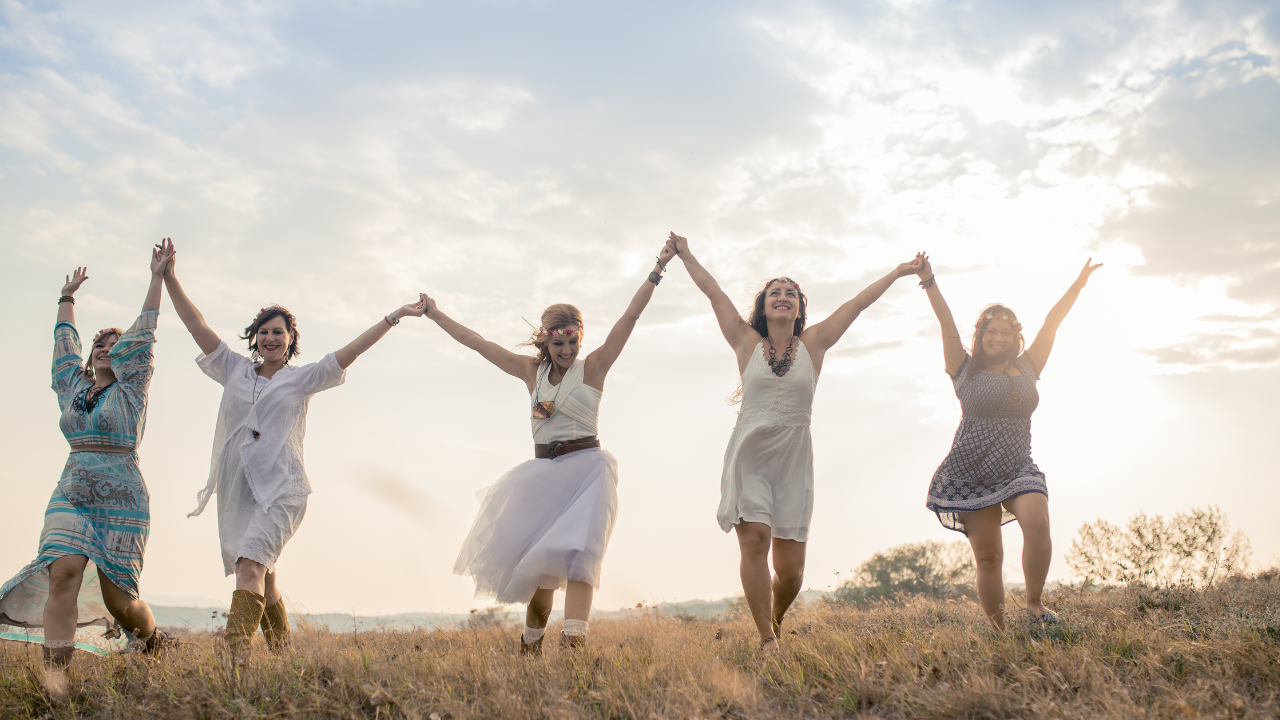
Gratitude changes how we see the people in our lives.
18-minute read · Published 17 October 2025 · Updated 16 October 2026
Have you ever noticed how easy it is to take the people closest to us for granted? We can appreciate someone deeply and still move through our days without acknowledging the things they do, the support they offer or the difference their presence makes in our lives. It isn't necessarily because we have stopped caring. Often, it is because familiarity and the demands of everyday life have gradually taken our attention elsewhere.
We become accustomed to the people who are always there. The partner who takes care of something without being asked, the friend who remembers to check in, the family member who knows when we need support. Their contributions become part of the rhythm of our lives, and what once felt thoughtful or generous can begin to feel ordinary.
I think this is one of the more interesting aspects of gratitude. It isn't simply about appreciating what we have or recognising the good things in our lives. It also influences how we see other people, how we respond to their kindness and whether we recognise the value they bring to our everyday experiences.
When we begin paying attention to these things, we often discover that connection is not only about spending time together. It is also about recognising one another.
What gratitude has to do with connection
When we think about gratitude, we often think about appreciating our health, our family, a comfortable home or an opportunity that has come our way. These are meaningful expressions of gratitude, but there is another dimension that I find particularly interesting, and that is how gratitude develops through our relationships with other people.
Think about the last time someone did something thoughtful for you without being asked. Perhaps a friend called because she knew you were having a difficult week, your partner took care of something that had been worrying you, or someone remembered a small detail from a conversation you had weeks earlier.
The gesture itself may have been simple, but what made it meaningful was the recognition that someone had considered you. They had noticed something about your life and chosen to respond with care.
Gratitude begins when we recognise kindness rather than letting it disappear into the ordinary business of the day. When we acknowledge it, particularly when we tell the person what their thoughtfulness meant to us, we give something back to the relationship.
Appreciation allows us to recognise the value someone brings to our lives, while gratitude helps us acknowledge what we have received through their kindness, generosity or presence. When we express gratitude, particularly when we tell someone what their thoughtfulness meant to us, we offer something meaningful in return.
This is important to recognise because gratitude is not simply about feeling fortunate. It is also about recognising the contributions other people make to our lives, often in ways we have become so familiar with that we barely notice them.
Why appreciation strengthens relationships
Research suggests that feeling appreciated by someone close to us is associated with greater relationship satisfaction and commitment. What is particularly interesting is that the experience of receiving appreciation can be as important as the gratitude another person feels. In other words, we may appreciate someone enormously, but if we rarely communicate it, they may not experience that appreciation in the same way.
Consider the difference between assuming your partner knows you value everything they do and taking a moment to acknowledge something specific. Both may come from genuine affection, but the second gives the other person an opportunity to feel recognised.
If what you say lacks sincerity, it affects how appreciation is received; genuine expressions of gratitude may support relationship satisfaction, while appreciation perceived as insincere may offer little benefit. I believe this offers a useful reminder that gratitude should never become another communication technique we use to produce a particular response. Its value comes from recognising something we sincerely appreciate and allowing the other person to know.
Of course, appreciation alone cannot resolve every relationship difficulty. Healthy relationships also require honesty, communication, mutual respect and the willingness to address problems. Gratitude should never become a reason to overlook hurtful or unfair behaviour.
What it can do is help us maintain a more complete picture of the person in front of us, particularly during the ordinary pressures of everyday life. We can recognise someone's kindness while also needing to have a difficult conversation, and we can appreciate a relationship while acknowledging that something within it needs to change.
Both can be true.
The relationship we have with ourselves
There is another relationship worth considering when we talk about gratitude, and it is the one we have with ourselves.
I have often spoken about how easily women can become their own harshest critics. We notice what we haven't finished, the choices we wish we had made differently, the things we believe we should be doing better and the expectations we haven't quite managed to meet.
For many women, particularly during midlife, this becomes more complicated as our bodies, responsibilities, relationships and priorities begin to change. We may find ourselves questioning decisions we once felt confident about or comparing who we are today with who we thought we would become.
This is where I believe gratitude can offer a useful change in perspective.
Rather than asking ourselves to feel pleased with everything about our lives, we can begin by acknowledging our own efforts more fairly. We might recognise the patience it took to navigate a difficult conversation, the courage it took to make an uncomfortable decision, or the care we have continued to offer our families during a demanding season.
This is not about congratulating ourselves for every small achievement or avoiding personal responsibility. It is about developing a more balanced understanding of who we are.
When we continually measure our own worth against what we achieve or how much we do for other people, we can begin to approach relationships in the same way. We may feel we have to earn affection by being useful, agreeable or endlessly available.
Learning to appreciate ourselves can help us recognise that connection does not have to depend on how much we give or how well we perform. We can be loved and valued for who we are, not only for what we do.
Gratitude when life is difficult
I don't believe gratitude requires us to find something positive in every difficult experience. There are circumstances in life that are painful, unfair or beyond our control, and acknowledging that reality is an important part of emotional wellbeing.
When someone we love is unwell, a relationship is changing, or we are navigating a period of uncertainty, being told to focus on the positive can feel dismissive. We may need time to understand what is happening, acknowledge our feelings and consider what support we need.
Yet even during difficult periods, we can sometimes recognise the kindness of people around us. A friend who listens without trying to solve everything, someone who offers practical help or a family member who understands that we are having a difficult day can remind us that we are not facing everything alone.
We can appreciate these gestures without feeling grateful for the circumstances that made them necessary.
Research examining how couples support one another during stressful experiences has found associations between supportive coping, gratitude and relationship satisfaction. Although these findings do not establish that gratitude alone improves relationships, they suggest that recognising support may be one part of how couples maintain connection during difficult periods.
Unwisely, gratitude is sometimes presented as though it should change how we feel about a difficult situation. In my experience, its value is often more practical than that. It can help us recognise the people showing up, the support available to us, and the relationships we may want to nurture. Sometimes gratitude gives us a reason to reach out rather than continuing to manage everything on our own.
From gratitude to generosity and community
One aspect of gratitude I value most is the relationship between appreciation and generosity. Throughout my life, I have been involved in different forms of community service, and those experiences have shaped how I understand both giving and receiving.
When we volunteer, offer support or contribute to something beyond our immediate responsibilities, we often begin with the intention of helping someone else. Yet the experience can also change how we understand ourselves and the people around us. We meet people whose circumstances differ from our own, hear stories we might never otherwise encounter, and become more aware of the experiences we share.
I have learned that meaningful service is not about seeing ourselves as the person who has something to give and another person as someone who needs to receive it. We all have experiences, knowledge, kindness and perspective to offer, and there are times when, in each of our lives, we need the generosity of others.
There is lots of research supporting a positive relationship between gratitude and prosocial behaviour, which refers to actions intended to benefit other people. People who experience gratitude may be more inclined to respond to kindness with generosity or offer support to others. This does not mean that feeling grateful automatically makes someone generous, but it does suggest that appreciation and our willingness to contribute to others are meaningfully connected.
I believe this is one of the most valuable ways to understand gratitude in everyday life. When someone offers their time, shares their experience or makes us feel welcome, we can acknowledge that contribution. When we have an opportunity to offer the same consideration to someone else, we can choose to do so.
Over time, these exchanges can help establish trust, familiarity and a sense of belonging. This is particularly relevant when we think about building friendships and community as adults. It is easy to assume that connection should happen naturally, as it may have when we were younger and surrounded by people through school, work or family activities. But friendships often require more deliberate attention as our lives become fuller and our circumstances change. We may need to make the first invitation, return to the same community activity several times, remember something another person has shared or take an interest in someone without knowing whether a friendship will develop.
Gratitude can encourage this outward attention because it helps us recognise the value of another person's company, experience and contribution.
Gratitude, loneliness and belonging
Research has also found a relationship between gratitude and loneliness, with people who report higher levels of gratitude generally reporting lower levels of loneliness.
The correlation is interesting, although it is important to understand what it does and does not mean. The research does not suggest that practising gratitude will prevent loneliness or that someone experiencing loneliness simply needs to become more appreciative. Loneliness can arise from many circumstances, including bereavement, isolation, changing family roles, poor health and relationships in which we do not feel understood.
What the findings suggest is that gratitude and our experience of social connection are related.
One possible explanation is that gratitude helps us recognise the support and care already present in our lives. Another is that people who feel more connected have more opportunities to experience gratitude. Both may play a part.
For me, the practical lesson is not to use gratitude as a substitute for meaningful relationships, but to recognise that appreciation may help us nurture the relationships we have while we continue creating opportunities for new ones.
Making gratitude part of how we relate
Gratitude can be described as a process of recognising an opportunity, appreciating it and then making use of it. I like this understanding because it moves gratitude beyond a feeling and into the way we participate in everyday life.
When we apply it to our relationships, the process becomes practical. We notice an opportunity for connection, recognise its value and choose how we would like to respond.
Perhaps your daughter begins telling you about something that happened during her day while you are preparing dinner. You could keep doing what you are doing while half-listening, or you might recognise that she is inviting you into something important to her and give her a few minutes of your attention. Perhaps a friend has been on your mind, but you have been waiting until you have more time to call. You could continue putting it off, or you might send a message to let her know you have been thinking of her. Perhaps your partner has been quietly taking care of something for weeks, and you realise you have stopped acknowledging the effort involved. You could assume they already know you appreciate them, or you could tell them.
These are ordinary decisions, but they influence the quality of our relationships. They also remind us that gratitude is most useful when it changes something about how we live.
There is little benefit in recognising how important our relationships are if we continually give them whatever attention remains after everything else is done. Sometimes creating a more connected life requires us to reconsider our priorities, our availability and the habits that have gradually taken over our days.
A few ways to practise gratitude in your relationships
While a formal gratitude practice can apply at times, I prefer to think of gratitude as something we develop through ordinary experience rather than another routine we must complete perfectly.
You might begin by paying attention to the people who contribute to your day. Notice the colleague who makes your work easier, the family member who offers support or the friend who makes time to listen. Consider whether you have expressed your appreciation recently, and when the opportunity arises, be specific about what you value.
It can also help to notice how you respond when someone expresses appreciation for you. Many women quickly dismiss a compliment or minimise their contribution. Rather than immediately explaining why something was no trouble, consider allowing yourself to receive the acknowledgement.
Another practice is to notice when your attention has become divided during a conversation. You do not need to be perfectly present every moment of the day, but recognising when your mind has wandered gives you an opportunity to return to the person in front of you. And if you have been feeling disconnected, consider whether there is a relationship you would like to give more attention to. It may be an existing friendship that has become distant, someone you have been meaning to invite for coffee or a local group you have considered joining.
Rather than waiting until life becomes less busy, you might begin with one small, deliberate action.
At the end of the day, you could also ask yourself a different question from the usual: What am I grateful for?
Who contributed something meaningful to my life today, and did I take the time to recognise it?
Your answer may reveal an opportunity to express a thank you. It may also help you see which relationships are supporting your wellbeing and which ones may need more attention.
A more connected way of living
When I think about what makes a relationship meaningful, I come back to the experience of being seen, accepted and appreciated for who we are. It is something most of us want from our partners, friends, families and communities, yet it can be surprisingly easy to overlook the ways we might offer that same experience to someone else.
Gratitude gives us a practical place to begin because it encourages us to recognise the people who contribute to our lives and to respond with greater awareness and appreciation. It also asks us to be honest about what we value.
If relationships matter to us, how much time and attention do we give them? If we want stronger friendships, are we making space for them to develop? If we want to feel more connected to ourselves, are we recognising our own needs and efforts with the same consideration we extend to others? These questions aren't always comfortable, but they can help us see the gap between the relationships we say we value and how we are living.
Gratitude can replace the work involved in building healthy relationships. We still need to communicate honestly, establish boundaries, make time for one another and recognise when a relationship is no longer healthy. But gratitude can help us see what is worth nurturing. It reminds us that the quality of our lives is influenced not only by what we achieve or accumulate, but also by the people with whom we share our experiences and the care we offer and receive along the way.
Perhaps that is why gratitude sits so naturally at the heart of connection. It helps us recognise the value of another person, and that recognition gives us a reason to pay attention, express appreciation and participate more fully in the relationship.
And sometimes, creating a more fulfilling life begins with recognising the people who are already part of it.
With care,
Ocea
Lets create a life you love
A little support for your gratitude practice
I created my 30-Day Gratitude Journal to help you make space for gratitude and awareness in everyday life without turning it into another obligation. Each day offers an opportunity to pause, reflect and notice what you value, including the people and experiences that can become easy to overlook.
If you'd like to dig a little deeper
These are some of the papers and readings that informed my thinking for this article.
Grateful Living. Read here→
Hittner, J. B., & Widholm, C. D. (2024). Meta-analysis of the association between gratitude and loneliness. Applied Psychology: Health and Well-Being, 16(4), 2520–2535. Read the paper →
Leong, J. L. T., Chen, S. X., Fung, H. H. L., Bond, M. H., Siu, N. Y. F., & Zhu, J. Y. (2020). Is gratitude always beneficial to interpersonal relationships? The interplay of grateful disposition, grateful mood, and grateful expression among married couples. Personality and Social Psychology Bulletin. Read the paper →
Ma, L. K., Tunney, R. J., & Ferguson, E. (2017). Does gratitude enhance prosociality? A meta-analytic review. Psychological Bulletin. Read the paper →
Oguni, R., Ishii, C. (2024) Gratitude promotes prosocial behavior even in uncertain situation. Scientific Reports 14. Article 14379. Read the paper →
Roth M, Good N, Ledermann T, Landolt SA, Weitkamp K and Bodenmann G (2024) Building happier bonds: gratitude as a mediator between dyadic coping and relationship satisfaction in romantic couples. Frontiers in Psychology. Read the paper →